How AI is affecting social media content creation

Lorna

Let’s be honest, at First Internet we’ve made our name through not cutting corners, avoiding manual penalties because of Google algorithm updates and generally avoiding jumping on trends too soon. That said, we’re always keen to make sure we’re on top of trends and assessing their benefit for our clients. AI has been a hot topic for years, but how does it continue to affect social media content creation?
You often now feel like you can’t move for the vast amounts of AI social media content creation on the platforms, or ‘AI Slop’ as it’s more commonly referred to (and often quoted in FI HQ).
It’s been a widely debated topic as to whether AI should form part of your social media marketing strategy, or if human focused content should be the priority.
In this article we’ll take a look at how AI can be used to generate content for social media posts of different kinds, as well as some of the AI features that social media platforms have introduced.
Everyone seems to think AI spawned into our lives over the past few years, but did you know that it’s actually been around since the 1950s?
It all began when Alan Turing published his imitation game concept as the earliest form of what we now consider AI, and then John McCarthy even coined the term “artificial intelligence” at the 1956 Dartmouth Conference.
Of course, these early foundations are vastly different from what AI is today, but it’s not a brand new concept.
In the last five years or so, with the introduction of platforms like ChatGPT, Claude and Gemini, AI has become a part of daily life. These platforms progressed from simply giving information or creating basic copy to generating lifelike photos and videos, having human-like conversations and developing the high tech online algorithms we use every day.
As more is continuously being learnt about AI and developing the platforms to provide even more new features, the AI universe is advancing fast and we could see a whole lot of new bits added to these platforms even within the next few months!
AI content creation is everywhere, some good, some absolutely terrible. It can take many different forms, most of which have been incorporated into social media strategies in some way.
Some examples of AI social media content creation for marketing purposes might include:
AI can be used in the initial planning stage, to suggest different ideas that could be developed into content for your social media channels. In this sense, AI is not directly responsible for content creation, but may still form a key part of your content planning process.
It can be useful getting you from A to B quicker if you’re stuck on how to develop a content idea, or need some inspiration for different ways to approach a campaign or content piece. Plus, it gives that balance of human input and AI technology, by taking the ideas generated by the AI platform then tweaking it to fit your brand or business.
You can ask AI to write…well…just about anything! Back when the AI platforms were in their fetus era, everyone was excited about the fact you could basically ask ChatGPT to write a full blog, or a full content calendar of social media posts and that would be job done.
These days it’s not quite the same.
As we’ve seen so much AI copywriting over the years, people have discovered that these AI platforms have a specific style of writing that can be instantly recognised. This has caused the majority of social media managers to avoid using AI to create copy, as it generates less engagement because people can tell it’s just been churned out by an AI tool instead of expertise given by a human mind.
AI is now capable of generating some pretty life-like images that make you stop and think…hang on…is this real or AI?
There’s also a lot of small businesses that use AI for things such as posters, leaflets, POS graphics, logos and of course social media graphics. It’s great if you’re on a budget and just need some assets fast, but again people have turned their nose up at people using AI to create graphics.
The problem is that a lot of these assets have the same style and look and it’s impossible to show your real branding through AI. It’s also off-putting to people as it signals that businesses aren’t valuing real-life graphic designers and artists and would rather put a prompt into an AI platform. Sentiment for AI image generation has quickly turned sour, so we could see the decline of people using AI for this purpose over time.
It is still used by social media managers for editing images or graphics they themselves have created, through removing an image’s background or replacing an object in an image with something else. This is useful as it’s still keeping that human touch to the content, but just enhancing it and making it look even better.
AI video production takes image generation into animated territory. You may have seen AI face animators, which can take a photograph of a person and animate their facial expressions. Some AI platforms can also transform the style of a video, e.g. creating a cartoon version of a live action clip.
People are quickly becoming wise to the use of AI in social media content creation and many now see it as a negative, especially when it comes to copywriting and AI generated imagery.
Therefore using it within a strategy has to be done carefully, focusing on using AI as a starting point for ideas and thoughts rather than creating all content using AI.
People have had time to wise up and are tired of seeing AI everywhere they look. So make sure you’re showing that an ACTUAL human has developed the content you’re putting out!
We delve into this topic more in our blog – ‘Why human-led content is key right now?’ click here to find out more.
The platforms are always competing to stay on top of trends and being the first to bring out new features, and the use of AI is no different.
Meta especially has spent billions to invest in new AI technology to add new features to their platforms in an effort to stay ahead of the curve and possess exclusive features that other platforms don’t have.
Facebook uses AI across its platform, both centre stage and behind the scenes. A lot of its AI use powers its core platform mechanism such as ranking your News Feed and Reels, targeting advertisements, translating languages automatically, and proactively detecting and removing harmful content or spam before it is reported.
However they are working on introducing more specific AI features for users to take advantage of, and have already implemented features. These include:
AI Mode
From exploring your feed to searching for specific information, this feature powered by Meta AI provides recommendations and answers to questions based on people and content within the platform, rather than just a list of links or answers.
Editing capabilities
There are a number of features Facebook has added into their in-app editing software. They have updated its camera roll sharing suggestions with new collage cutout templates, as well as new transition effects to produce smooth, stylised video montages.
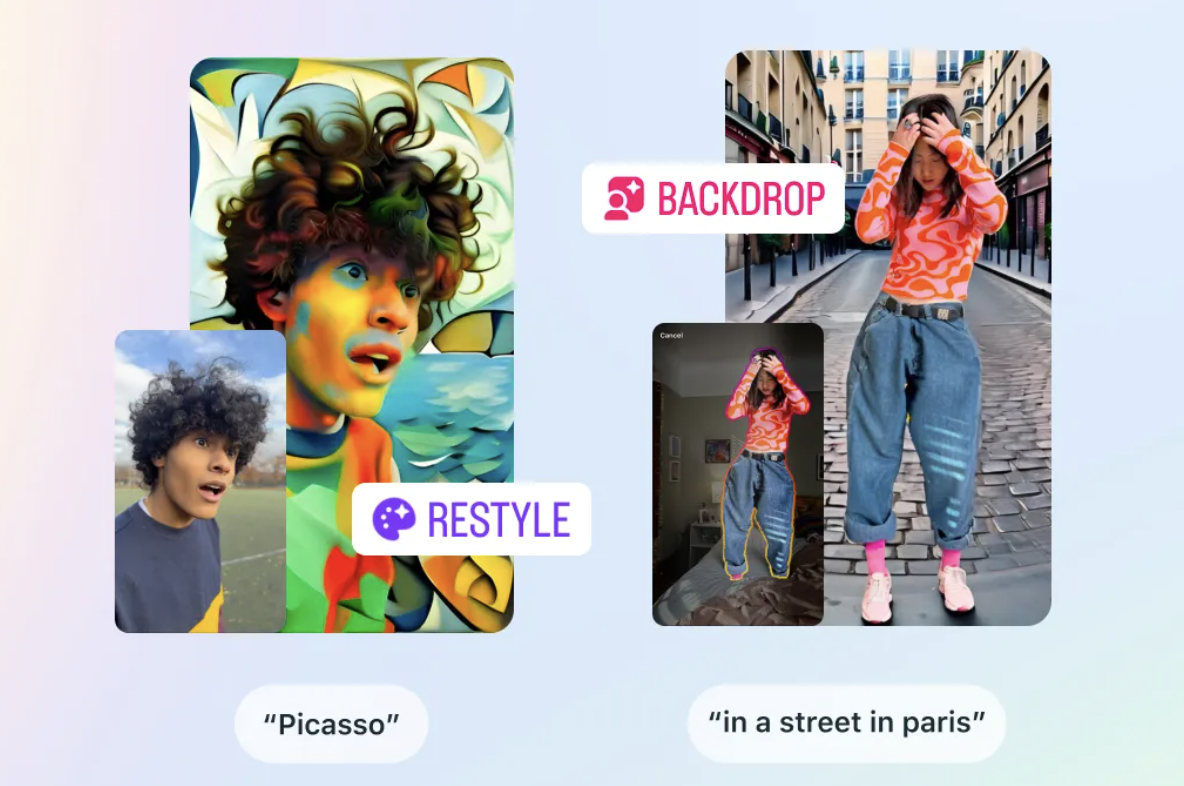
There’s also a clever feature that allows users to easily change their clothing, hair, and accessories with AI. All you need to do is tap the AI Edit icon in stories and select Wear It or go directly to your profile picture and tap Restyle profile picture with AI and select Wardrobe, then boom – a whole new you!
Facebook is committed to their AI investment, so we could see a whole load of new features being added consistently over the next few months and years.
As Instagram is part of Meta, it shares a lot of the same features with Facebook. However there are some features more focused on editing and imagery, which makes sense with Instagram being a highly visual platform.
With its Muse Image tool on Meta AI, you can use the @imagine command followed by a descriptive text prompt in chats to generate customised AI images, as well as taking people’s Instagram images and turning them into AI. This has received a large amount of backlash as it takes real life images of people and uses them to create AI generated images, which has made people question – where’s the privacy and protection for people’s faces?
There are some less controversial features for Instagram, including AI story templates, a search feature in DMs and the Restyle feature on Stories, like Facebook.
As with Facebook, we expect that Meta will further increase its use of AI on the platforms and continue to develop new features for users.
One of the first AI features that made its way into the mainstream social media framework, was Snapchat’s ‘My AI’. This is an AI ‘person’ that you can have conversations with, ask questions to and get idea suggestions from.
While this is similar to AI search engines, it feels like a more personal feature, as Snapchat gave it an avatar like other people you would speak to within the app. Because of this, a lot of users simply used the chatbot to talk to and get advice from rather than looking at it to answer questions like ChatGPT.
This caused some controversy as it was found that the chatbot was talking about potentially harmful things to young people, and seemed to not be regulated. Due to this, more restrictions were brought in to allow parents to block ‘My AI’ on their children’s accounts, as well as being able to clear the feature from recent chats.
There are other AI features on Snapchat that were brought in after ‘My AI’ that feel similar to other platforms. These include AI generated images, creating songs from chat messages and personalised photo packs in Memories.
It’s no surprise that so many people find TikTok addictive. The platform uses AI to decide what content to show to different people, focusing on suggestions that increase dwell time and keep visitors logged on for longer.
There are also new user features that have been added in the past few years, including:
Transforms static pictures or drawings into short, moving videos or story animations using text prompts.
Allows users to generate a digital AI version of themselves from a photo to star in customised clips or profile setups.
Converts written text into natural-sounding audio tracks using built-in digital voices instead of manual recording.
Breaks down video concepts into structured sections, hooks, and titles to help jumpstart content creation.
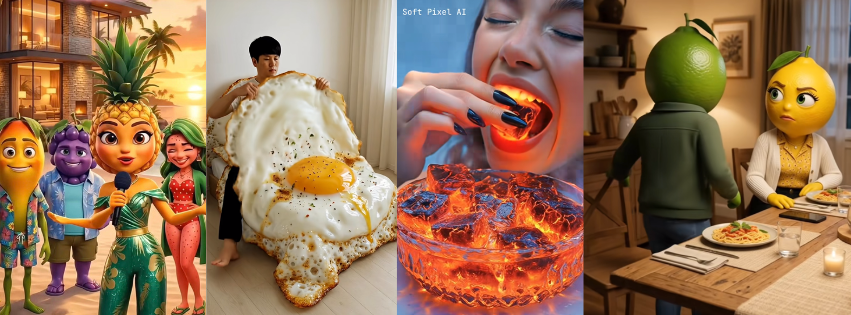
TikTok is also home to a lot of AI generated content created by users (AI Fruit Love Island we’re looking at you…) which you don’t often see in this way on other platforms. So while TikTok may not be committed to stuffing loads of AI features into their app, it is still home to a whole load of AI.
Everyone in the social media universe has heard of Grok, X’s flagship AI assistant. It features real-time data integration from the X platform, advanced reasoning, multimodal capabilities (text, vision, voice), and content generation tools. You can access it on web and mobile apps, featuring free tiers alongside enhanced paid SuperGrok plans.
While this may seem like a standard AI search platform integrated within the app, since its launch it has received a large amount of controversy. In early 2026, researchers found that the feature was enabling users to take people’s real life images and create an AI version where they were undressed or wearing provocative clothing. This sparked a huge amount of backlash from victims and campaigners who called for Grok to be shut down to prevent more abuse. In an article published by the BBC, Dr Daisy Dixon, a lecturer in philosophy at Cardiff University told them that she had found that people were using Grok to undress her images, leaving her feeling “shocked”, “humiliated” and fearing for her safety.
X responded to this by implementing more technical measures to prevent this from happening.
The chatbot has also been accused of spreading misinformation and far-right propaganda, which they said had been the cause of “unauthorised modifications or model errors”.
While the feature does have its scandals and downsides, it is arguably one of the most recognisable AI features across social media platforms.
As a platform based on real people and their careers, LinkedIn has kept its use of the tool fairly brief. It does offer generative AI tools across its platform to help users optimise profiles, search for jobs, draft messages, and manage recruitment. These features are mainly only available for Premium accounts.
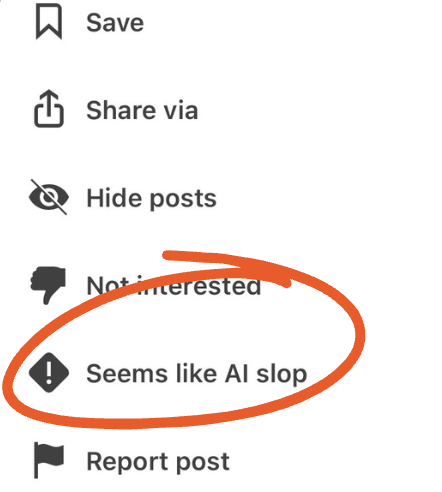
LinkedIn has recently introduced a ‘seems like AI slop’ reporting button. This is available on every post on the platform and users can report content if it seems like generic AI generated content of a poor quality, so that LinkedIn can adjust its feed recommendations. This is one of the first steps forward that a platform has made to actually decrease the amount of AI generated content available on the platform
This could signal a shift in attitude towards AI content, and what once was a fun novelty to see on your feed is now seen as sloppy and an eye-sore.
There are AI features for both users and creators on YouTube, which enhance how people watch, interact with, and produce video content.
For viewers these include:
This feature allows you to ask questions about the video you are watching, request related content recommendations, or summarise concepts without interrupting playback.
AI will automatically structure long videos into chapters and highlight key concepts to help users navigate content faster.
For creators these include:
This generates AI-powered video backgrounds and fantastical visual elements for YouTube Shorts using simple text prompts.
The AI assistant built into YouTube Studio that will analyse your channel analytics and viewer behavior to suggest video ideas and titles.
Fairly simply, this translates video audio into multiple languages to help creators expand their global reach.
Automatically trims raw footage, finds top moments, adds voiceovers, and syncs background music into a starter draft.
YouTube recently announced that they are doubling their monetisation requirements, and starting from the 1st February 2026, creators will need to generate 1,000 subs + 8,000 watch hours (or 20 million Shorts views) to be able to monitise their content, instead of the previous ,000 subs + 4,000 watch hours (or 10 million Shorts views).
While they have said this is due to ensuring their advertisers are receiving quality content, it could be argued that this is an effort to take a stand against AI bot accounts that are churning out YouTube shorts and clipping other creators’ videos to generate an income. This is a common problem across YouTube and also TikTok, so it will be interesting to see whether this deters more of these bot accounts from popping up on the platform.
As AI has developed over the years, regulations and restrictions have needed to be implemented in order to keep users safe and increase transparency about the content they are seeing.
Most platforms now have AI content labels, where content made using AI (or suspected to have been made using AI) will display an AI content label informing users that the content has been created with AI software. This is to help people clearly distinguish content that is real life from content that is AI generated and perhaps misleading.
Platforms such as Claude have also started to add an invisible watermark to their content so that it can be detected that content has been written using AI.
Plus, after some scandals, platforms like X and Snapchat have tweaked their AI technology to not provide harmful services and reduce the negative impact it has on users of these platforms.
However as AI is constantly evolving, the platforms will have to keep up and monitor any issues that need addressing.
Like any marketing tool, AI has its good bits, and its not so good bits. If used right, it can help social media teams save time and make more informed decisions. However, relying too heavily on AI can create challenges around authenticity, accuracy, creativity and trust. Understanding both the pros and cons can help you decide where AI fits into your social media strategy, if at all.
Saves time and improves efficiency
One of the biggest advantages of AI in social media marketing is its ability to speed up time-consuming tasks. AI tools can help generate content ideas, draft captions, repurpose existing content and suggest social media posts, allowing marketers to spend more time on strategy, creativity and audience engagement.
Can improve paid social advertising
For businesses running paid social campaigns, AI can help analyse campaign performance and identify patterns in audience behaviour. This can help marketers make more informed decisions about targeting, creative and budget allocation, with the aim of improving ROI.
Makes personalisation easier
AI can help businesses tailor content to different audience segments based on factors such as interests, behaviour and previous interactions. More relevant content can improve engagement and create a more personalised experience for followers.
AI-generated content can lack authenticity
Social media is built around genuine connections, and audiences can often tell when content feels overly automated or generic. If every caption, image or response is generated by AI, a brand can lose some of its personality and human voice. AI works best as a support tool rather than a complete replacement for human creativity and judgement.
AI can produce inaccurate information
AI-generated content isn’t automatically correct. It can produce outdated, misleading or entirely fabricated information, particularly when asked to provide factual details. Human review is essential before publishing AI-generated content, especially when posts contain statistics, claims, industry information or advice.
Over-reliance can reduce creativity
AI is useful for generating ideas, but relying on it too heavily can lead to repetitive or predictable content. If businesses use the same tools and prompts as everyone else, their social media feeds can start to look very similar. Original ideas, brand experience and human creativity remain important for standing out.
It can affect audience trust
Transparency and authenticity matter to consumers. While some audiences are comfortable with AI-assisted content, others may react negatively to content that appears artificial or misleading. Rather than trying to hide AI usage, businesses should focus on ensuring that the final content is useful, accurate, appropriate for the brand and genuinely valuable to the audience.
One of the biggest criticisms of using artificial intelligence in social media posts is a lack of respect for human content creators, many of whom produced the posts, artwork and other images that were used – without compensation – to train these AI models. This also applies to graphic designers and copywriters whose work is being replaced with AI generated versions, and the businesses that use these AI generated content forms signalling to some users that they don’t think paying a human to do these creative jobs is necessary.
The copyright implications are still being tested in the courts, but that’s a much bigger issue than we can address here – it is, however, something to keep in mind when deciding whether to use AI in your marketing campaigns.
Of course, you can avoid the controversy simply by not using artificial intelligence in your campaigns. By definition, AI follows where others lead, generating output based on what humans have done before it.
Why not take the lead? Work with a reputable creative agency on your next social media marketing campaign and/or put your own personality into your content creation, and capitalise on your inspiration and intuition – qualities AI will never truly be able to possess.
Cara: A dedicated art and portfolio network built specifically to block AI-generated images and protect creators from having their work scraped for model training.
Ruverse: A social app designed explicitly to ban AI-generated content, functioning as a human-only content reserve.
SpaceHey: A retro-style social network inspired by early MySpace that relies purely on HTML profiles, forums, and chronological community interaction without automated recommendation systems
You cannot completely remove or turn off built-in artificial intelligence on major social media apps like Facebook, Instagram, or Snapchat. However, you can stop AI from using your photos and posts for training, mute chatbot assistants, and turn off specific automated features like comment summaries.
AI in social media is not inherently good or bad—it’s a tool. Like all tools, its impact depends on how it’s used. With mindful application, AI can transform social media marketing, supercharge social media strategies, and improve the experience for both brands and social media users.
Artificial intelligence accounts for an estimated 40% to over 70% of social media content, heavily dominating images, text, and backend algorithms
AI is everywhere now because technology shifted from hidden background tools to public chat programs, driven by massive corporate investments and the sudden ability of machines to process human language and creative tasks.
Yes, social media uses artificial intelligence extensively. Platforms rely on AI and machine learning to power their core features, from personalising your feeds and targeting ads to filtering out harmful content and spam.